

Remembrance Day was once known as Armistice Day. At 11 am on November 11, 1918, the Allies and Germany signed an armistice after four years of war. It was an agreement to end the fighting of World War I, also known as the Great War or the First World War.
News of the signed armistice reached Toronto by wire at 2:50 am on November 11. Toronto newspaper, The Mail and Empire (part of The Globe and Mail), reported that a man who lived on Parliament St had heard the news of the peace at 4 am. He went into the streets in his pyjamas to inform his neighbours of the information. He said, “Women appeared in the flimsiest of clothing, some covered only with a wrap or kimono, and forgot the cold in the heat of their enthusiasm.”

The Celebrations
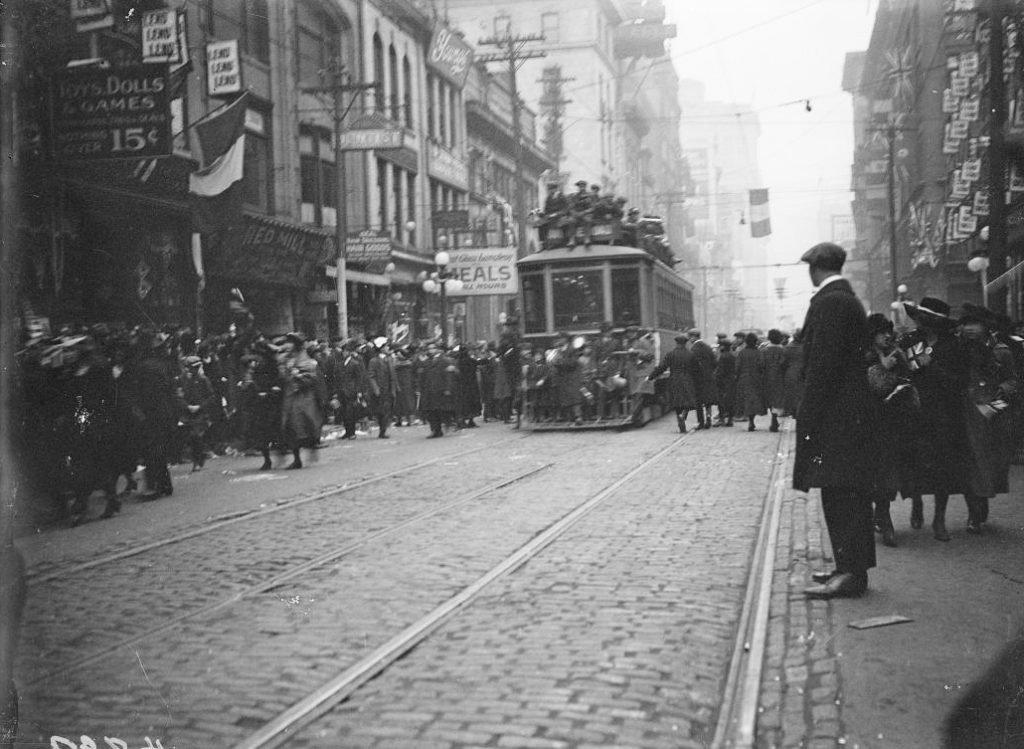
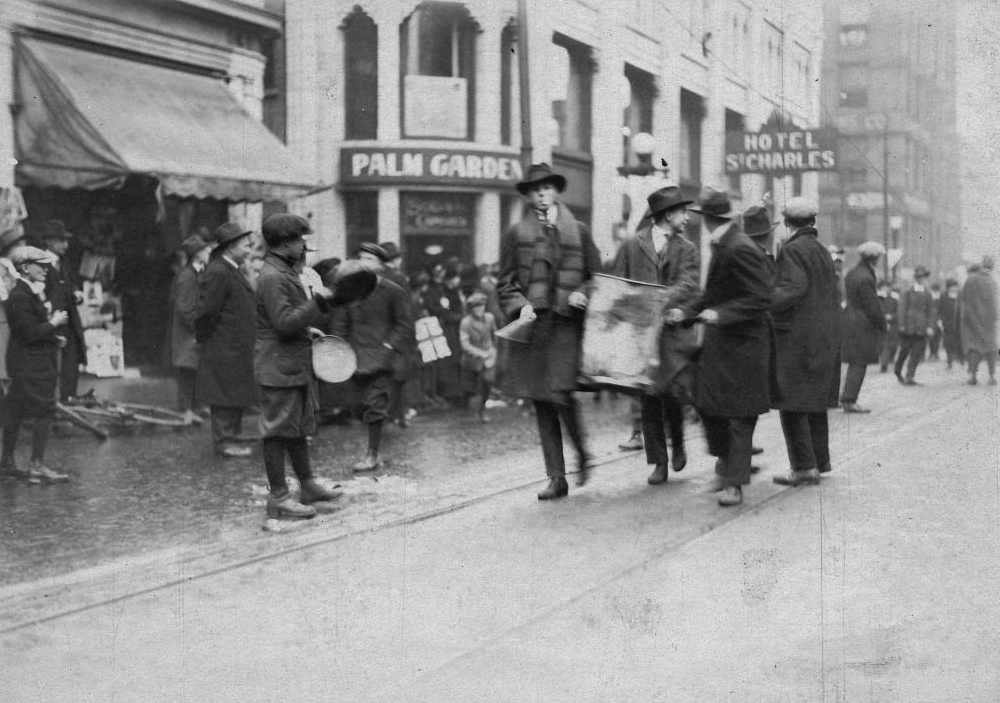
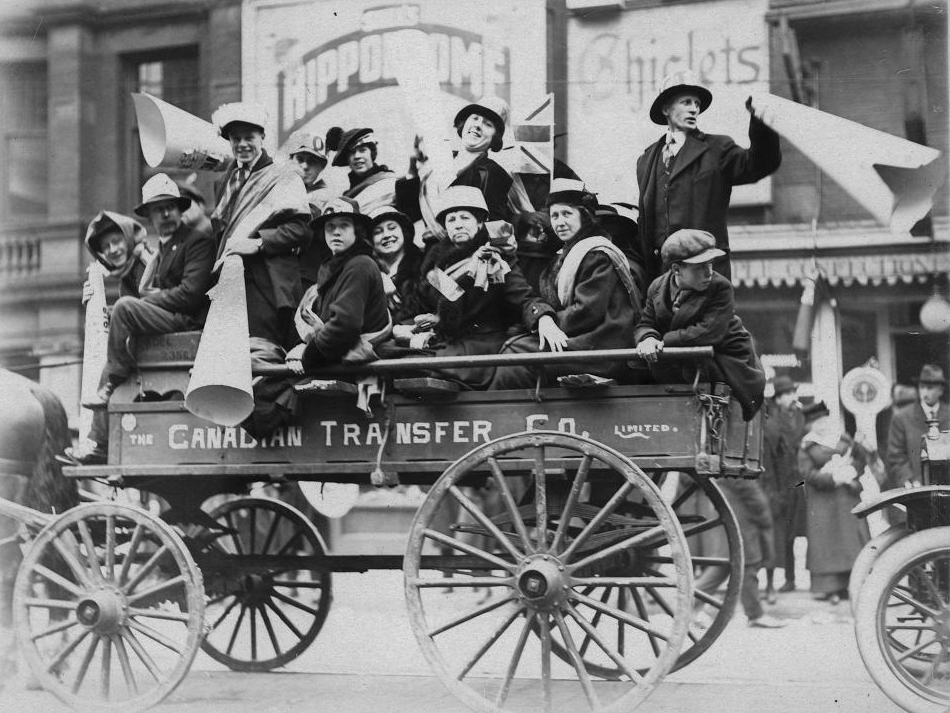
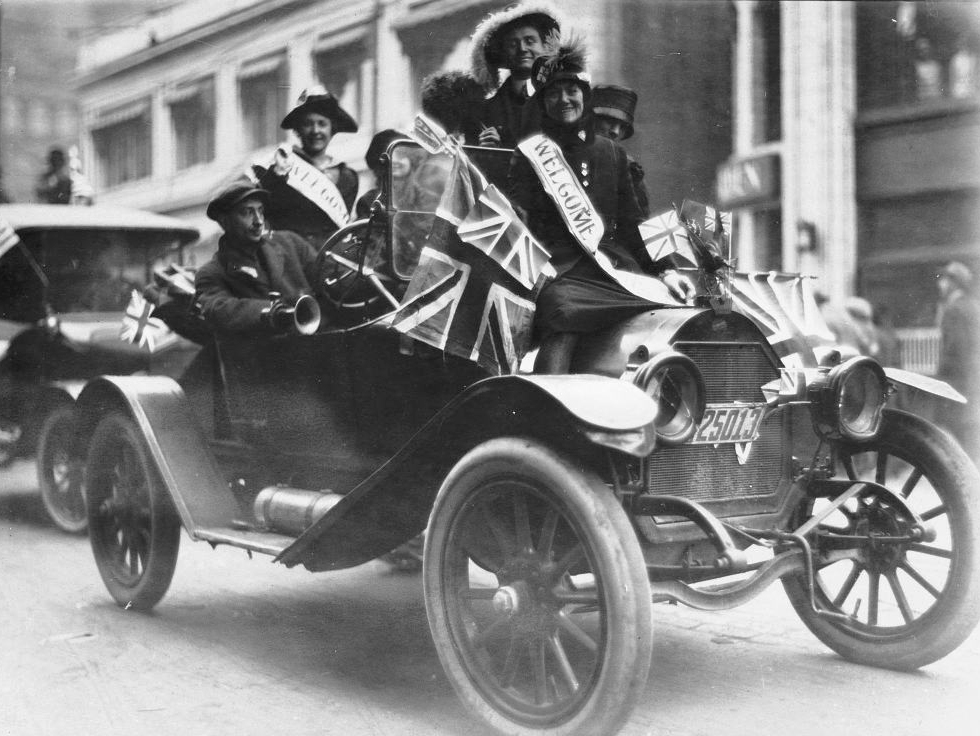
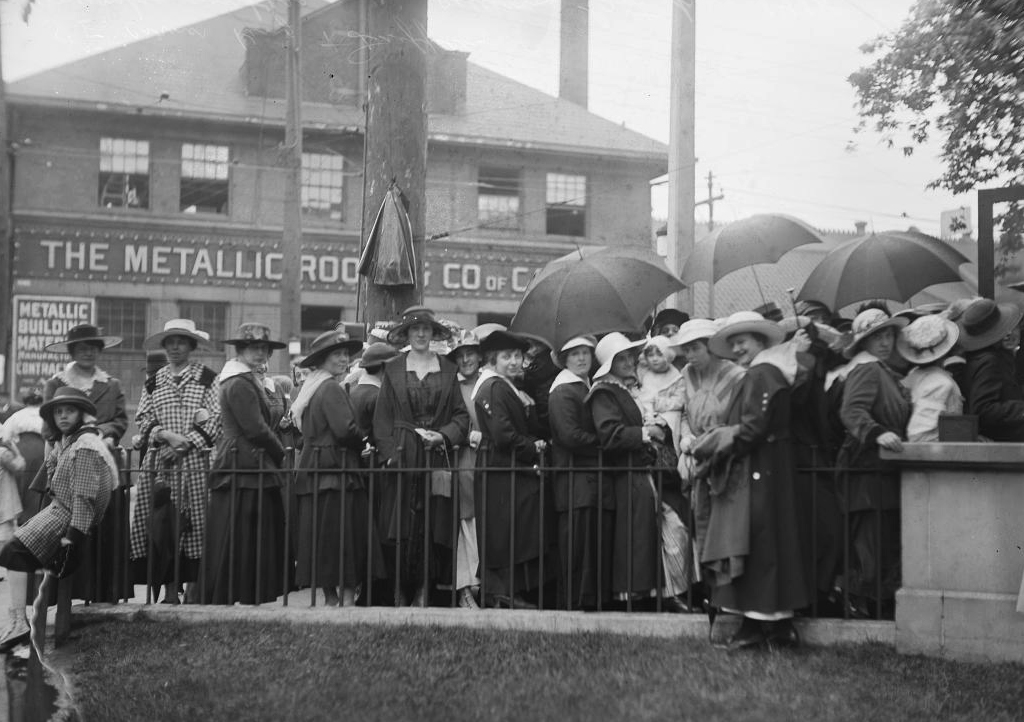
Newspaper headlines read “Extra! Extra! Germans Accept the Allies’ Terms” and “VICTORY,” It was a day of great joy in Toronto. People celebrated that the 1,567 days of war were over by blowing horns and factory whistles, ringing church bells, singing, banging pots, clanging pan lids and playing musical instruments. Many marched towards downtown and Old City Hall. Shops selling the British flag were doing great business with people waving the Union Jack or draping themselves with it. The City’s transit system halted while factories, banks and the Stock Exchange closed for the day.
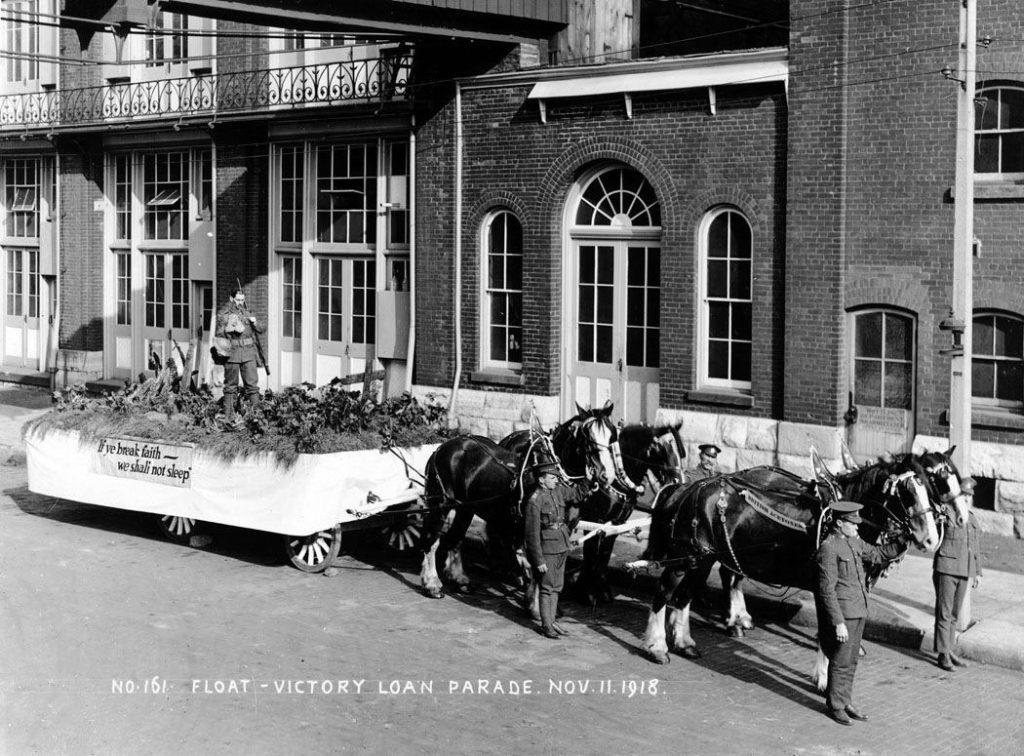
It just so happened that a Victory Loan Parade was planned for that day. Soldiers and tanks were in the parade, along with an air show. The day’s celebrations continued well into the night.
Those Who Served
More than 420,000 Canadians served overseas during the war. Of these individuals, over 66,000 were reported as deceased or missing, while as many as 170,000 were injured. In Toronto, over 2,500 women worked in the munition factories, playing a significant role in the city’s war effort.
In 1931, Armistice Day was renamed Remembrance Day. The United Kingdom, Belgium, France, Poland and the United States also commemorate the solemn day.

The Poppy
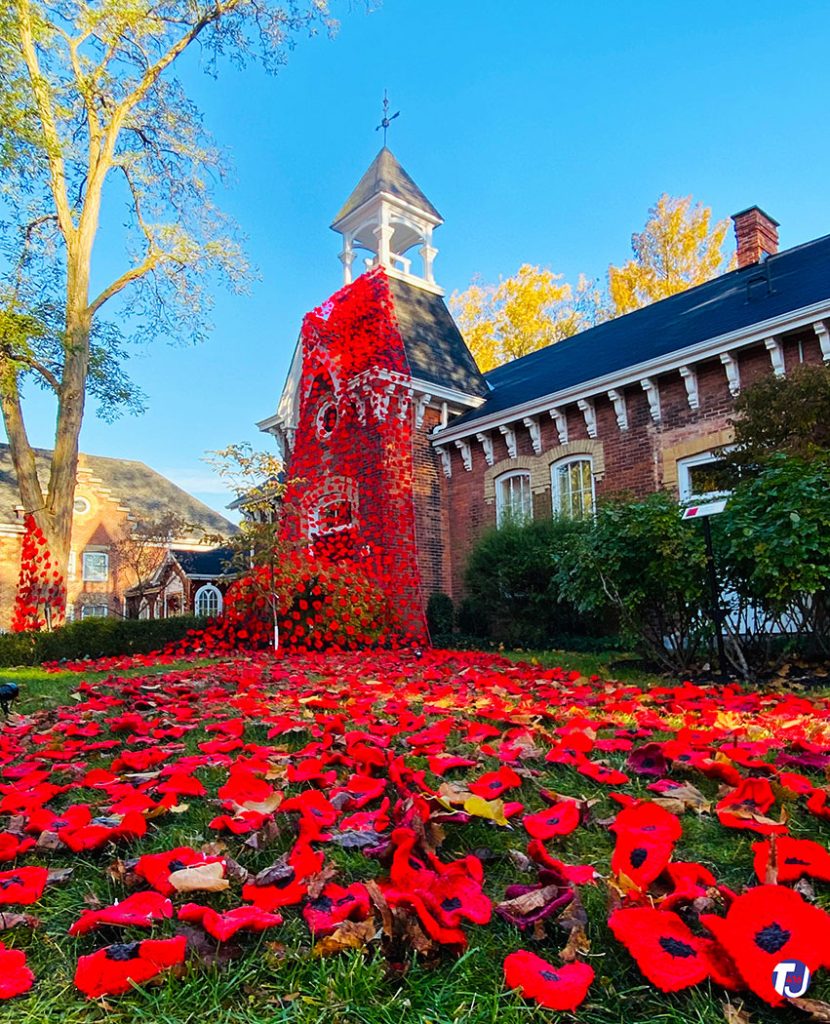
In 1915, Lieutenant-Colonel John McCrae, a doctor from Guelph, Ontario, was in the trenches providing care to wounded soldiers near Ypres, Belgium, in the area commonly referred to as Flanders.
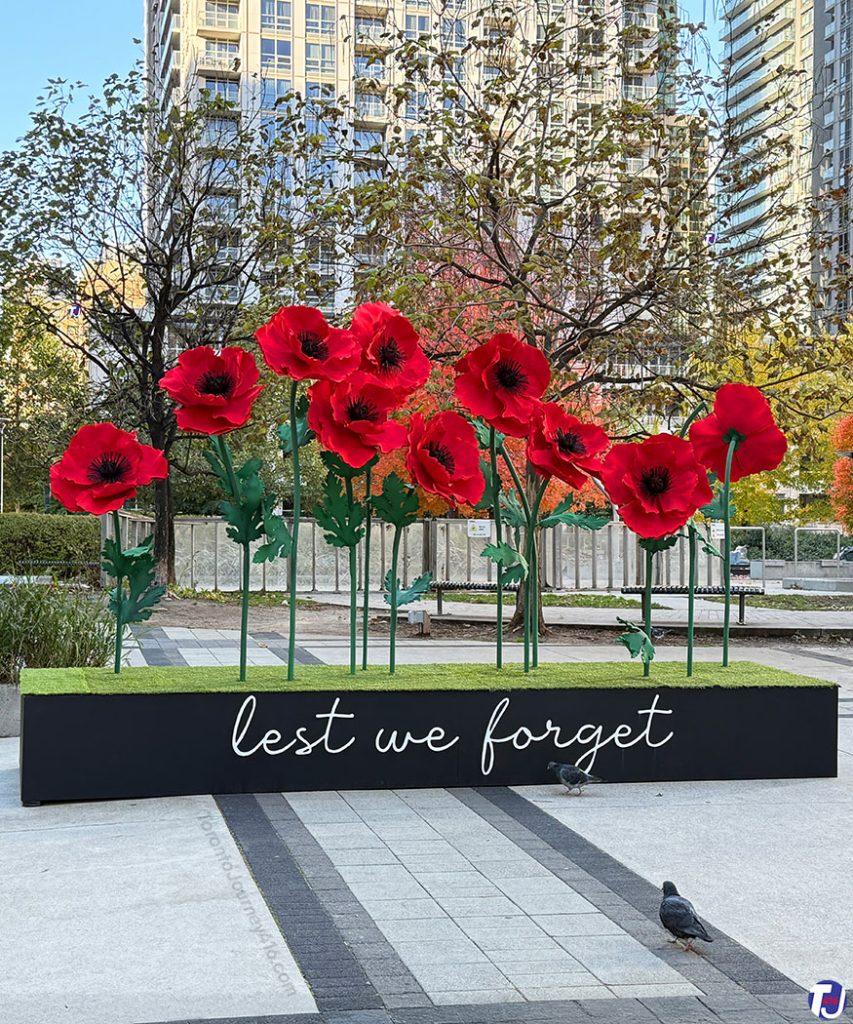
The day before McCrae wrote his poignant poem, “In Flanders Fields,” a friend and fellow soldier was killed in battle and buried in a makeshift grave with a wooden cross. Wild poppies were growing between the crosses that marked the numerous graves of those who had fallen, inspiring his famous poem. The poppy officially became the symbol of remembrance in 1921.
Click to share your comments below.
Armistice Day Photos






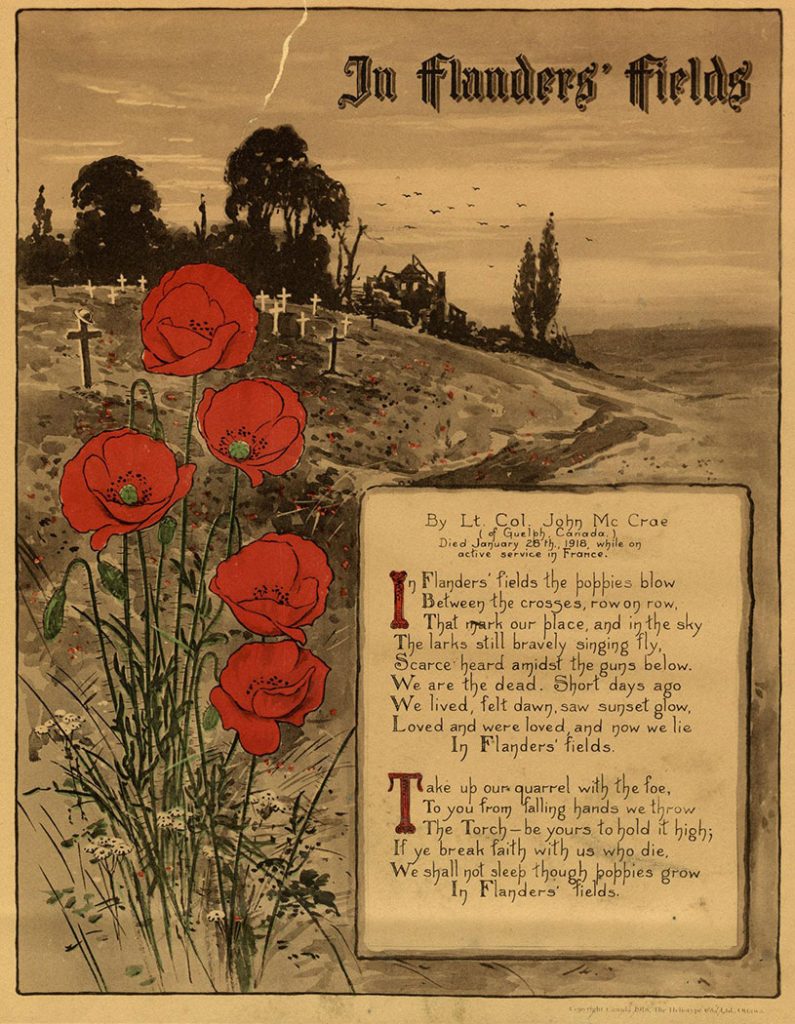
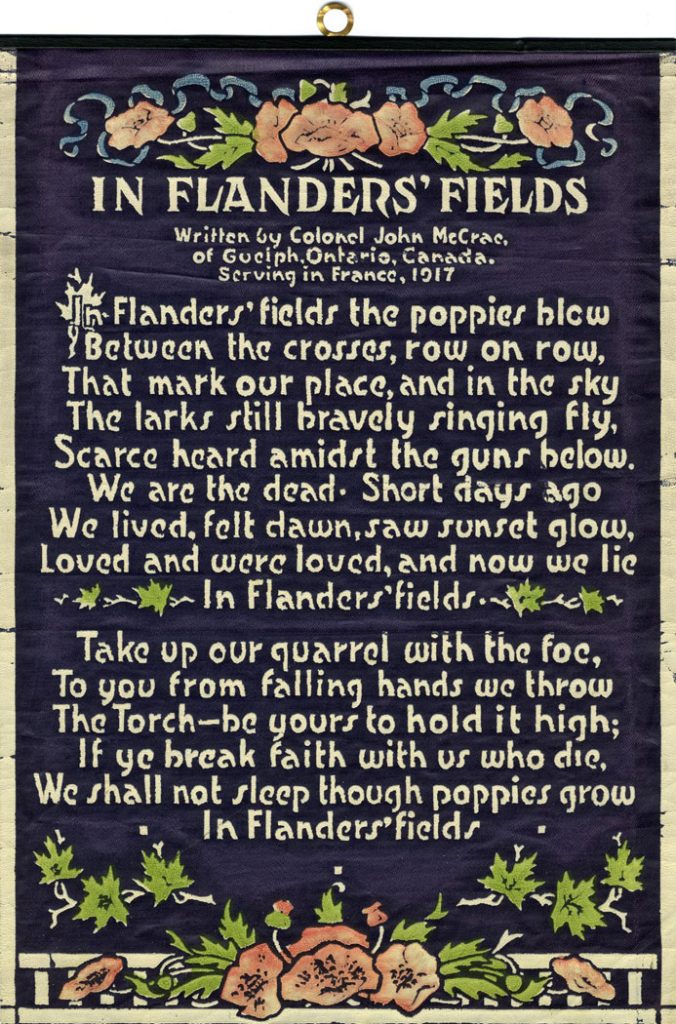
“In Flanders’ fields the poppies blow
Between the crosses, row on row,
That mark our place, and in the sky
The larks still bravely singing fly,
Scarce heard amidst the guns below.
We are the dead. Short days ago
We lived, felt dawn, saw sunset glow,
Loved and were loved, and now we lie
In Flanders’ fields.
Take up our quarrel with the foe,
To you from falling hands we throw
The Torch – be yours to hold it high;
If ye break faith with us who die,
We shall not sleep though poppies grow
In Flanders’ fields.”
By Lt. Col. John McCrae of Guelph, Canada. Died January 28th, 1918, while on active service in France
(Toronto Public Library 1918-McCRAE-POEM-SB)


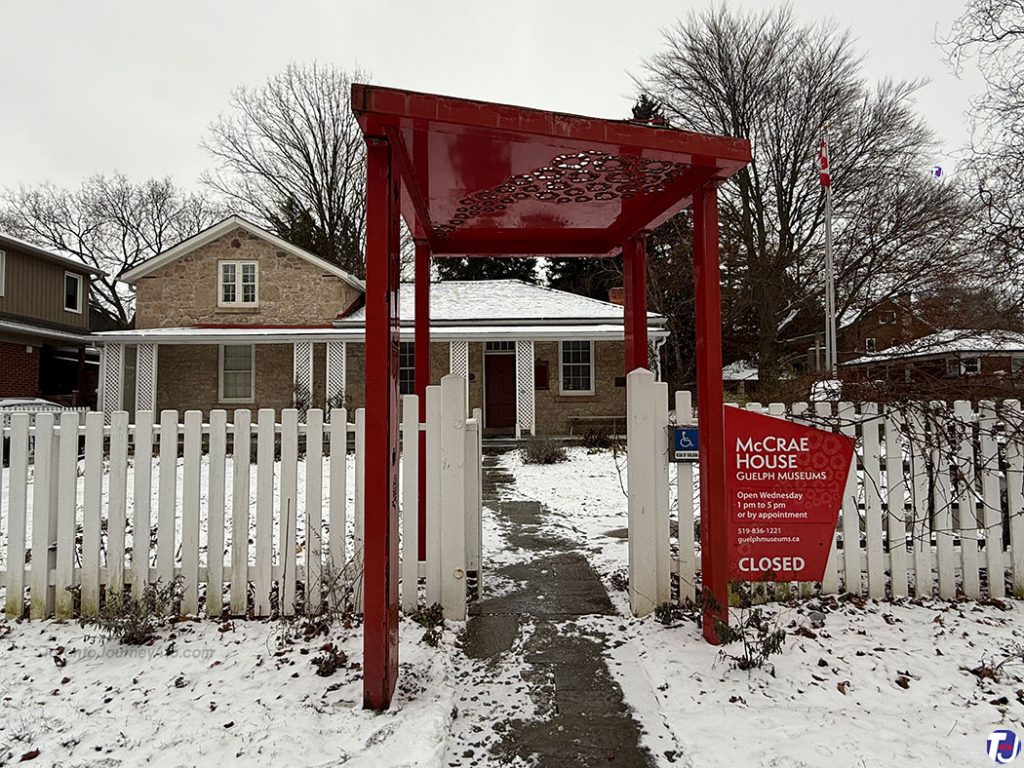
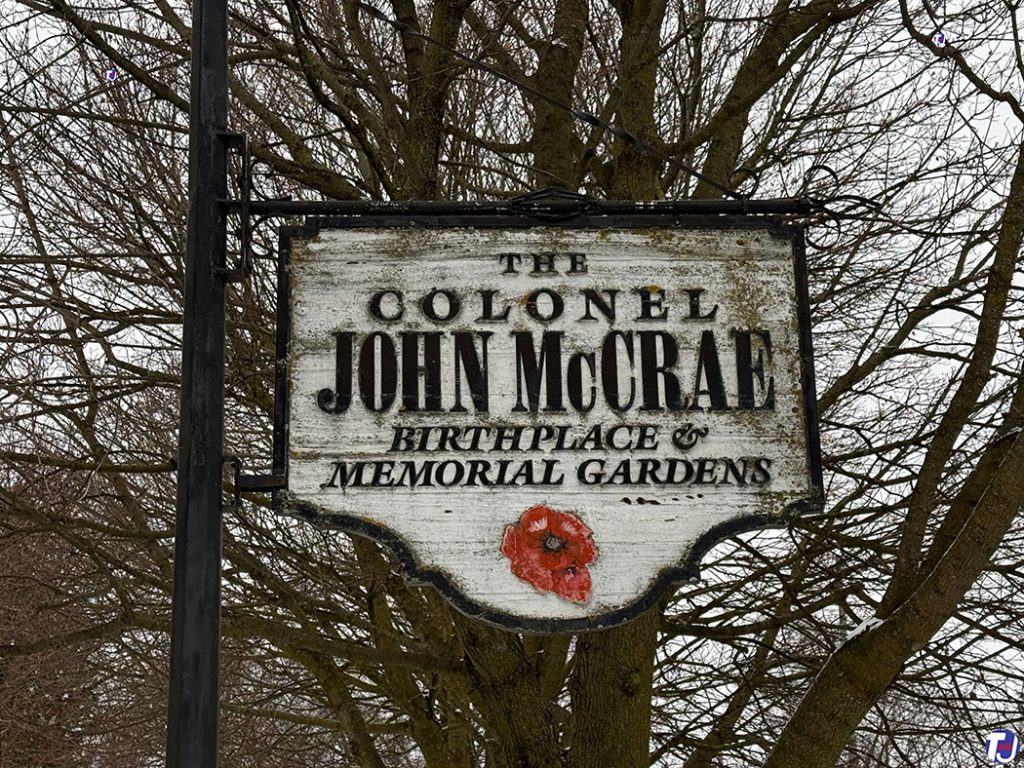
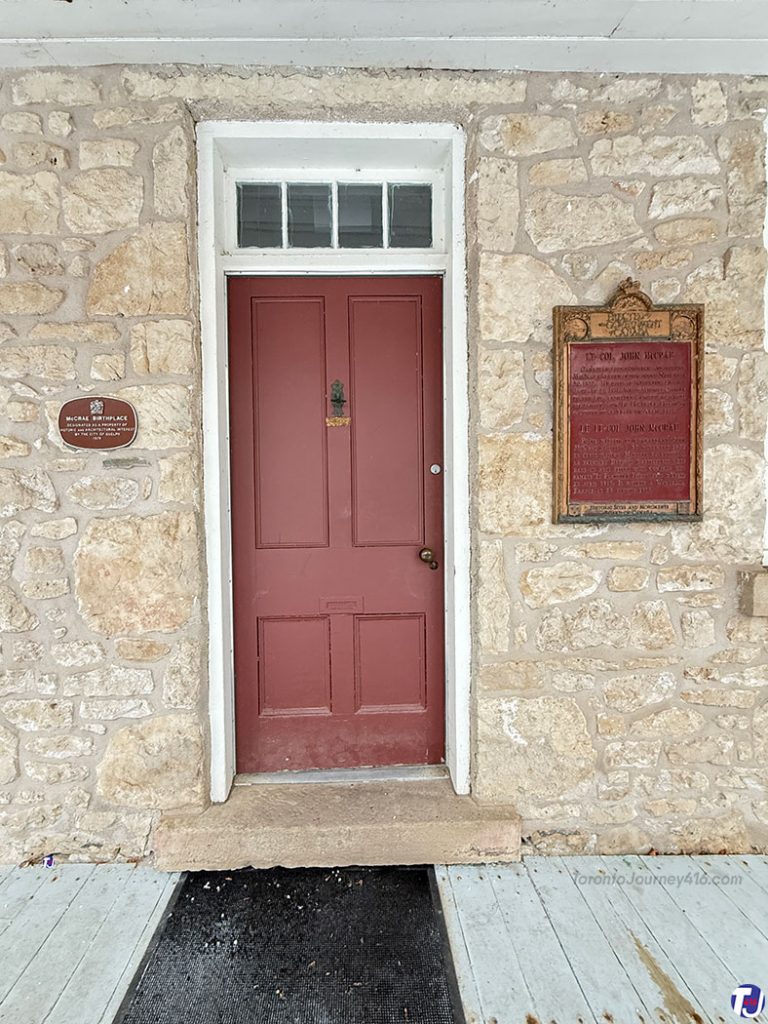
LT-COL John McCrae
“Canadian poet, physician and soldier, McCrae was born in this house November 30, 1872. He died at Wimereux, France, January 28, 1918. While Medical Officer to the 1st Artillery Brigade, he wrote his famous poem “In Flanders Fields” in a dugout near Ypres in April, 1915.”
Historic Sites and Monuments – Board of Canada
&
McCrae Birthplace
“Designated as a property of Historic and Architectural interest by the city of Guelph 1979”
The plaques are located at 108 Water St at the McCrae House Museum in Guelph, Ontario, Canada
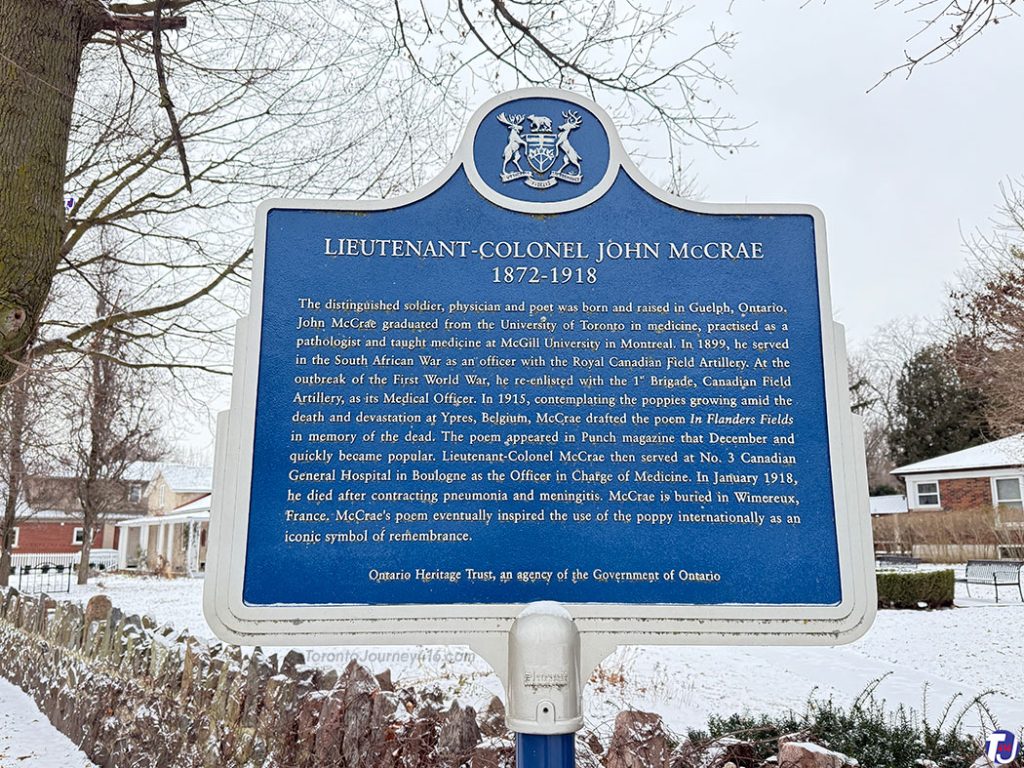
Lieutenant-Colonel John McCrae 1872-1918
“The distinguished soldier, physician and poet was born and raised in Guelph, Ontario. John McCrae graduated from the University of Toronto in medicine, practised as a pathologist and taught medicine at McGill University in Montreal. In 1899, he served in the South African War as an officer with the Royal Canadian Field Artillery. At the outbreak of the First World War, he re-enlisted with the 1st Brigade, Canadian Field Artillery, as its Medical Officer. In 1915, contemplating the poppies growing amid the death and devastation at Ypres, Belgium, McCrae drafted the poem In Flanders Fields in memory of the dead. The poem appeared in Punch magazine that December and quickly became popular. Lieutenant-Colonel McCrae then served at No. 3 Canadian General Hospital in Boulogne as the Officer in Charge of Medicine. In January 1918, he died after contracting pneumonia and meningitis. McCrae is buried in Wimereux, France. McCrae’s poem eventually inspired the use of the poppy internationally as an iconic symbol of remembrance.”
Ontario Heritage Trust, an agency of the Government of Ontario
The plaque is located at Water St and McCrae Blvd, near the McCrae House Museum Guelph, Ontario, Canada
SOURCE
- City of Toronto: Armistice Day in Toronto
- Toronto Star: Armistice Day Toronto
- The Legion
- Government of Canada: First World War
- Photos: Denise Marie for TorontoJourney416
- Vintage Photos: City of Toronto Archives
